Proviso to Canon 113 of the Code of 1603
(see Canon B 29, here)
Provided always, that if any man confess his secret
and hidden sins to the minister, for the unburdening of his
conscience, and to receive spiritual consolation and ease of mind
from him; we do not in any way bind the said minister by this our
Constitution, but do straitly charge and admonish him, that he do
not at any time reveal and make known to any person whatsoever any
crime or offence so committed to his trust and secrecy (except they
be such crimes as by the laws of this realm his own life may be
called into question for concealing the same), under pain of
irregularity.
Approved and
Commended forms of service under Canons B 2, B 4 and B 5
Authorized Services
Alternative to The
Book of Common Prayer
Approved by the General Synod pursuant to
Canon B 2 (see Canon B 2 here))
As at 1 January 2012
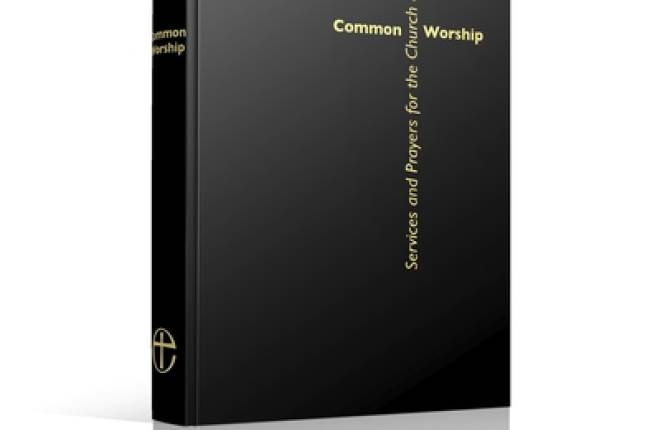
Published in Common
Worship: Services and Prayers for the Church of
England and Common
Worship: Collects and Post Communions
1. A Service of the Word
2. Schedule of permitted variations
to The Book of Common Prayer Orders for Morning and
Evening Prayer where these occur in Common Worship
3. Prayers for Various Occasions
4. The Litany
5. Authorized Forms of Confession
and Absolution
6. Creeds and Authorized
Affirmations of Faith
7. The Lord's Prayer
8. The Order for the Celebration of
Holy Communion also called The Eucharist and The Lord's Supper
9. Collects and Post Communions
10. Rules for Regulating Authorized
Forms of Service
11. The Lectionary
12. Opening Canticles at Morning and
Evening Prayer; Gospel Canticles; Other Canticles; A Song of Praise
(Epiphany); Te Deum Laudamus
Published in Common
Worship: Christian Initiation
13. Holy Baptism
14. Emergency Baptism
15. Holy Baptism
and Confirmation
16. Seasonal Provisions and
Supplementary Texts
17. Affirmation of Baptismal
Faith
18. Reception into the Communion of
the Church of England
Published in Common
Worship: Pastoral Services
19. Wholeness and Healing
20. The Marriage Service with
prayers and other resources
21. Thanksgiving for the Gift of a
Child
22. The Funeral Service with prayers
and other resources
23. Series One Solemnization of
Matrimony
24. Series One Burial Services
Published in Common
Worship: Ordination Services
25. Ordination Services
Published in Common
Worship: Daily Prayer (Fourth Impression
2010)
26. The Calendar
Published separately
27. Public Worship with Communion by
Extension (NB explicit permission must be obtained from the
bishop for the use of this rite.)
28. Weekday Lectionary
29. An Order of Marriage for
Christians from Different Churches
30. Additional Weekday
Lectionary
The above are all authorized for use until
further resolution of the Synod.
Form of service approved by the Archbishops
of Canterbury and York without time limit for use in their
respective Provinces
A Service for Remembrance Sunday (included in
Common Worship: Times and Seasons - see below)
Commended services and
resources
(Material commended by the House of Bishops
as being suitable for use by ministers in exercise of their
discretion under Canon B 5)
(see Canon B 5, here)
As at 1 January 2012
Published in Common
Worship: Services and Prayers for the Church of
England
1. Introduction to Morning and
Evening Prayer on Sunday
2. Introduction to Holy Baptism
3. Short Prefaces for the Sundays
before Lent and after Trinity
4. Additional Canticles
Published in the President's Edition
of Common Worship
5. Additional Blessings
Published in Common
Worship: Christian Initiation
6. Rites Supporting Disciples on the
Way of Christ
7. Admission of the Baptized to
Communion
8. Celebration after an Initiation
Service outside the Parish
9. Thanksgiving for Holy Baptism
10. A Corporate Service of
Penitence
11. The Reconciliation of a
Penitent
Published in Common
Worship: Pastoral Services
12. An Order for Prayer and
Dedication after a Civil Marriage
13. Thanksgiving for Marriage
14. Ministry at the Time of
Death
15. Receiving the Coffin at Church
before the Funeral
16. Funeral of a Child: Outline
Orders and Resources
17. At Home after
the Funeral
18. Memorial Services: Outline
Orders and Sample Service
19. Prayers for Use with the Dying
and at Funeral and Memorial Services
20. Canticles for Marriages,
Funerals and Memorial Services
Published separately
21. Material contained in New
Patterns for Worship
22. Material contained in Common
Worship: Times and Seasons
23. Material contained in Common
Worship: Times and Seasons - President's Edition for Holy
Communion
24. Material contained in Common
Worship: Festivals
25. Common Worship: The
Admission and Licensing of Readers
26. Material contained in:
Common Worship: Holy Week and Easter
Services which comply with the provisions
of a Service of the Word (see Authorized Services, no.
2)
As at 1 January 2012
Published in Common
Worship: Services and Prayers for the Church of
England
1. An Order for Morning Prayer on
Sunday
2. An Order for Evening Prayer on
Sunday
3. An Order for Night Prayer
(Compline)
4. An Order for Night Prayer
(Compline) in Traditional Language
Published separately
5. Sample services contained in
New Patterns for Worship
6. Services contained in Common
Worship: Daily Prayer
Versions of the Bible and of the
Psalms
By virtue of the Prayer Book (Versions of the
Bible) Measure 1965, the following may be used in Book of
Common Prayer Services (with permission of the parochial
church council) instead of the Authorized Version of the Bible and
the Psalter in The Book of Common Prayer.
| Revised Version |
Jerusalem Bible |
| Revised Standard Version |
Good News Bible (Today's English Version) |
| New English Bible |
| The Revised Psalter |
| The Liturgical Psalter (The Psalms: A New Translation for
Worship) |
Any version of the Bible or Psalter not prohibited
by lawful authority may be used with Alternative Services and
Commended Services. There are currently no such prohibitions.
Regulations
on the administration of Holy Communion
(see Canon B 12 paragraph 3, here)
Made by the Church Assembly, November 1969
1. (1) An application to the bishop to authorize
under section 2 (1) of the Prayer Book (Further Provisions) Measure
1968 a baptized and confirmed person to distribute the Holy
Sacrament in any parish shall be made in writing by the incumbent
or priest-in-charge of the parish and supported by the
churchwardens, and shall specify the name and give relevant
particulars of the person to whom the application relates.
(2) Where the cure is vacant and no priest-in-charge
is appointed, an application under the preceding paragraph may be
made by the rural dean and supported by the churchwardens.
2. It shall be at the discretion of the bishop to
grant or refuse the application and to specify the circumstances or
conditions in or on which the authority is to be available.
3. In these Regulations 'the Bishop' means the bishop
of the diocese or a person appointed by him for the purpose, being
a suffragan or assistant bishop or archdeacon of the diocese.
Note: The Measure of 1968
referred to in paragraph 1 above was repealed by the Church of
England (Worship and Doctrine) Measure 1974. The power to make
Regulations is contained in Canon B 12.
Admission of
baptized children to Holy Communion Regulations 2006
(see Canon B 15A paragraph 1(a), here)
Regulations made by the General Synod on 8
February 2006 and which came into force on 15 June
2006
The General Synod hereby makes the following
Regulations under paragraph 1(c) of Canon B 15A:
1. These Regulations may be cited as the Admission of
Baptized Children to Holy Communion Regulations 2006 and shall come
into force on such day as the Archbishops of Canterbury and York
may jointly appoint.
2. Children who have been baptized but who have not
yet been confirmed and who are not yet ready and desirous to be
confirmed as required by paragraph 1(a) of Canon B 15A may be
admitted to Holy Communion provided that the conditions set out in
these Regulations are satisfied.
3. Every diocesan bishop may at any time make a
direction to the effect that applications from parishes under these
Regulations may be made in his diocese. The bishop's discretion in
this respect shall be absolute, and he may at any time revoke such
a direction (without prejudice to the validity of any permissions
already granted thereunder).
4. Where a direction under paragraph 3 is in force in
a diocese, an incumbent may apply to the bishop for permission that
children falling within the definition in paragraph 2 may be
admitted to Holy Communion in one or more of the parishes in the
incumbent's charge. Such application must be made in writing and
must be accompanied by a copy of a resolution in support of the
application passed by the parochial church council of each parish
in respect of which the application is made.
5. Before granting any permission under paragraph 4,
the bishop must first satisfy himself (a) that the parish concerned
has made adequate provision for preparation and continuing nurture
in the Christian life and will encourage any child admitted to Holy
Communion under these Regulations to be confirmed at the
appropriate time and (b) where the parish concerned is within the
area of a local ecumenical project established under Canon B 44,
that the other participating Churches have been consulted.
6. The bishop's decision in relation
to any application under paragraph 4 shall be final, but a refusal
shall not prevent a further application being made on behalf of the
parish concerned, provided that at least one year has elapsed since
the most recent previous application was refused.
7. Any permission granted under paragraph 4 shall
remain in force unless and until revoked by the bishop. The bishop
must revoke such permission upon receipt of an application for the
purpose made by the incumbent. Such application must be made in
writing and accompanied by a copy of a resolution in support of the
application passed by the parochial church council of each parish
in respect of which the application is made. Otherwise, the bishop
may only revoke a permission granted under paragraph 4 if he
considers that the conditions specified in paragraph 5 are no
longer being satisfactorily discharged. Before revoking any
permission on these grounds, the bishop shall first notify the
incumbent of his concerns in writing and shall afford the incumbent
a reasonable time to respond and, where appropriate, to take
remedial action.
8. Where a permission granted under paragraph 4 is in
force, the incumbent shall not admit any child to Holy Communion
unless he or she is satisfied that (a) the child has been baptized
and (b) a person having parental responsibility for the child is
content that the child should be so admitted. Otherwise, subject to
any direction of the bishop, it is within the incumbent's absolute
discretion to decide whether, and if so when, any child should
first be admitted to Holy Communion.
9. The incumbent shall maintain a register of all
children admitted to Holy Communion under these Regulations, and
where practicable will record on the child's baptismal certificate
the date and place of the child's first admission. If the baptismal
certificate is not available, the incumbent shall present the child
with a separate certificate recording the same details.
10. A child who presents evidence in the form
stipulated in paragraph 9 that he or she has been admitted to Holy
Communion under these Regulations shall be so admitted at any
service of Holy Communion conducted according to the rites of the
Church of England in any place, regardless of whether or not any
permission under paragraph 4 is in force in that place or was in
force in that place until revoked.
11. These Regulations shall apply to a cathedral as
if it were a parish, with the modifications that:
(a) any application under
paragraphs 3 or 7 must be made by the dean of the cathedral
concerned, accompanied by a copy of a resolution
in support of the application passed by the chapter of the
cathedral concerned;
(b) the obligations imposed on the
incumbent under paragraphs 8 and 9 shall be imposed on the dean of
the cathedral concerned.
12. A diocesan bishop may delegate any of his
functions under these Regulations (except his functions under
paragraph 3) to a person appointed by him for the purpose, being a
suffragan or assistant bishop or archdeacon of the diocese.
13. In these Regulations:
(a) 'incumbent', in relation to a
parish, includes:
(i) in a case where the benefice
concerned is vacant (and paragraph below does not apply), the rural
dean;
(ii) in a case where a suspension
period (within the meaning of the Pastoral Measure 1983) applies to
the benefice concerned, the priest-in-charge; and
(iii) in a case where a special
cure of souls in respect of the parish has been assigned to a vicar
in a team ministry by a Scheme under the Pastoral Measure 1983 or
by licence from the bishop, that vicar; and
(b) references to paragraph numbers
are to the relevant paragraph or paragraphs in these
Regulations.
Advice to
clergy concerning marriage and the divorced
(see Canon B 30, here)
Marriage in church after
divorce
In July 2002, the General Synod resolved:
'That this Synod
a) Affirm in accordance with the
doctrine of the Church of England as set out in Canon B 30, that
marriage should always be undertaken as a "solemn, public and
life-long covenant between a man and a woman";
b) Recognize -
i) That some marriages
regrettably do fail and that the Church's care for couples in that
situation should be of paramount importance; and
ii) That there are exceptional
circumstances in which a divorced person may be married in church
during the lifetime of a former spouse;
c) Recognize that the decision as to
whether or not to solemnize such a marriage in church after divorce
rests with the minister (or officiating cleric if the minister is
prepared to allow his/her church or chapel to be used for the
marriage) and;
d) Invite the House of Bishops to
issue the advice contained in Annex 1 of GS1449.'
The following advice to clergy is that referred to
in paragraph (d) of the General Synod resolution and was issued by
the House of Bishops following the Synod's decision in November
2002 to rescind the earlier marriage resolutions of the Canterbury
and York Convocations (which had exhorted clergy not to use the
marriage service in the case of anyone who had a former partner
still living).
Advice to the clergy
1.1 Marriage is created by God to be a lifelong
relationship between a man and woman. The church expects all
couples seeking marriage to intend to live together 'for better for
worse … till death us do part'. It is not, then, a light matter to
solemnize a marriage in which one partner has a previous partner
still living. It is important that the decision you take as to whether to solemnize such a marriage should be on
the basis of clear principles that are consistent with the church's
teaching.
This advice has been issued by the House of Bishops
to assist you as a member of the clergy, since it remains your
decision under the Civil Law relating to marriage whether such a
couple may be married in church. (It is also intended for use by
the bishop and/or his adviser when cases of difficulty are referred
to him for advice.)
2. Principles
The Responsibility of the Parish Clergy1
2.1 The responsibility for deciding whether or not to
conduct a further marriage rests with you both for pastoral and
legal reasons. Experience suggests, however, that clergy may
welcome some support in making this decision and the following
advice is accordingly intended to assist you in this difficult and
sensitive task.
2.2 Under the Matrimonial Causes Act 1965 you are not
compelled to officiate at such further marriages, nor to make your
church available for them2. If you are unwilling to officiate at
further marriages or to make your church available for such
services, you should make this clear to enquiring couples at an
early stage.
2.3 If, as a 'minister' of a church, you are
unwilling to conduct such a wedding yourself you may invite a
colleague to do so; but other clergy in the area cannot be required
to conduct further marriages against their conscience. The decision
as to whether or not to conduct the marriage will become theirs
alone; and the issues discussed below will accordingly be as
relevant to their decision as to your own.
3. Issues and questions you may wish to consider in
the light of the Church's doctrine of marriage
3.1 It is your responsibility to form your own
judgement as to whether to proceed with the proposed further
marriage, in the light of the Church's teaching on marriage3 and of the
General Synod's Resolution of July 2002 set out above. You may find
it helpful to that end, in the course of your interview with the
couple, to satisfy yourself in relation to the following questions,
which are intended to draw out issues relevant to the Church's
teaching:
(a) Do the applicants have a
clear understanding of the meaning and purpose of
marriage?
q Do the couple understand that
divorce is a breach of God's will for marriage?
q Have they a
determination for the new marriage to be a life-long faithful
partnership?
(b) Do the applicants have a
mature view of the circumstances of the breakdown of the previous
marriage and are they ready to enter wholeheartedly and responsibly
into a new relationship?
q Does the divorced person appear to
be relatively free of self-deception and self-justification about
the past?
q Did the divorced person take the
first marriage seriously and has he/she learnt from mistakes?
q Is the other party aware of the
possible cause(s) of the breakdown of their future partner's
previous marriage?
q Is there an attitude of
repentance, forgiveness and generosity of spirit so that the
applicants are free to build a new relationship?
(c) Has there been
sufficient healing of the personal and social wounds of marriage
breakdown?
q Has there been enough time and
distance for the parties concerned to recover emotional stability
and good judgement?
q Are there any extant court
proceedings relating to the former marriage?
q Are responsibilities to the
children of any previous marriage being recognized and
honoured?
(d) Would the effects of the
proposed marriage on individuals, the wider community and the
Church be such as to undermine the credibility of the Church's
witness to marriage?
q Would the new marriage be likely
to be a cause of hostile public comment or scandal?
(e) Would permitting the new
marriage be tantamount to consecrating an old
infidelity?
q While it would be unreasonable to
expect that the couple should not even have known each other during
the former marriage(s), was the relationship between the applicants
- so far as you can tell from the information made available to you
- a direct cause of the breakdown of the former
marriage?
(f) Has either of the
parties been divorced more than once?
q In the case of multiple divorces,
the sheer complexity of relationships that may have developed will
inevitably make any assessment by you more difficult. However, the
Church witnesses to lifelong marriage, and should not find itself
being a party to 'serial monogamy', hence neither of the parties
should normally have been married and divorced more than
once.
(g) Do the
applicants display a readiness to explore the significance of the
Christian faith for their lives so that their further marriage is
not an isolated contact with the Church?
q Given that the provision of
careful marriage preparation should be the norm for all
couples seeking marriage in church, do the applicants possess an
understanding of the need of God's grace in relationships and show
a willingness to be open to Christian teaching?
4. Recommended Procedures
Dialogue with the Parish
4.1 As further marriage is likely to be a matter of
concern within the parish, you will no doubt wish to inform your
Parochial Church Council (PCC) of the general principles by which
you intend to exercise your discretion. As part of the process of
informing your own judgement in how to proceed in this sensitive
area, you may wish to seek the PCC's views on your proposed
approach. But, if so, it is important for the PCC to understand
that it has no power to direct you in this matter, and should not
seek to do so.
Relationships with fellow clergy
4.2 It will be helpful if there are occasional
discussions at Deanery Chapter meetings on the issues raised, so
that clergy are aware of the views of their colleagues, recognize
each other's position, and respect the position of those parishes
where such marriages are not allowed.
Local Ecumenical Partnerships
4.3 Special consideration will need to be given to
consultation with ecumenical partners in parishes where a Local
Ecumenical Partnership is in operation.
Documentation
4.4 The House of Bishops provides a leaflet on
Marriage in Church after Divorce for all enquirers4. It includes
both an explanatory statement and an application form to be
completed by the couple together with any other relevant material
about the process to be followed.
Interviews
4.5 If the couple's request is to be taken further,
the background of their case needs to be explored very carefully.
When you come to consider the circumstances of the couple, the
cause for the breakdown of the previous marriage may not be clear,
so you will wish to handle each case with a great deal of
sensitivity. It is recommended that this is done by at least two
confidential interviews, using the application form as background
material. It is desirable that the couple should understand the
purpose of the interviews and that attending the interviews cannot
imply an agreement to conduct a marriage. It is
also desirable that both partners should attend the interviews,
having been made aware in advance of the searching and personal
nature of the issues to be discussed.
4.6 The interviews cannot have a standard form but
the questions which are set out in Section 3 above may be of
assistance in enabling you to decide whether the proposed further
marriage would be consistent with the Church's teaching on
marriage.
Reference to the Bishop
4.7 Although the decision whether to conduct a
further marriage rests with you, you may wish to seek the advice of
your Diocesan Bishop5. In these instances you should send the
Bishop the couple's application form with a statement that you have
drawn up based on the interviews including any provisional
conclusions that you have reached. You will need to bear in mind
that the couple will be entitled to see what you have written
(under the Data Protection Act).
The Decision
4.8 In deciding your response to the application (see
2.1 above), you need to ensure the maximum degree of consistency in
your approach (as applicants are entitled to have their cases dealt
with by you consistently) as well as bearing in mind the
consequences of setting a precedent which it will be hard not to
follow.
4.9 It will be best if you convey your decision to
the couple in person. If you are declining to conduct the marriage,
you may feel it appropriate to convey your reasons in writing and
to copy this letter to the bishop if you have consulted him.
4.10 In cases where you agree to the couple's
request, you will need to explain the need for marriage preparation
(as for any marriage).
5. Services of Prayer and Dedication
5.1 There may be some cases when a marriage in church
is deemed inappropriate, yet you will wish to offer the couple the
possibility of beginning their life after a civil marriage in the
context of Christian worship. Here a Service of Prayer and
Dedication after a Civil Marriage could be appropriate, although it
is not intended to be used as a substitute for the marriage
service. However, the reasons for considering a further marriage
inappropriate may also apply to this option.
5.2 In 1985 the House of Bishops approved and
commended for use Services of Prayer and Dedication after Civil
Marriage. The vows taken in a civil marriage are just as binding as
those taken in church but the Service gives the
couple an opportunity to express their commitment before God. The
Church witnesses publicly to the permanence of their marriage,
while also expressing in a more personal way the love and
forgiveness of God.
5.3 You must of course be satisfied before conducting
the Service that the civil marriage has been contracted.
6. Legal Formalities6
Divorce Documents
6.1 Clergy conducting the marriage must see and check
the relevant divorce documents before arranging the marriage
preliminaries. Particular note should be taken that a decree
absolute has been obtained, not merely a decree nisi. The advice of
the Diocesan Registrar and/or the civil registrars should be sought
if there are any doubts about the document(s) presented.
6.2 The Church recognizes a declaration of nullity
made by the civil courts in the United Kingdom; that is, a
declaration that there is no valid marriage in existence. A cleric
has the same obligation to marry a parishioner whose marriage has
been annulled in this way as would exist if the parishioner had
never gone through a form of marriage. If in doubt, seek advice
from the Registrar.
6.3 Marriage preliminaries are the responsibility of
the priest and couple concerned. They follow the pattern applicable
in all other marriages, and if there is any doubt the priest should
contact the Diocesan Registrar or the Archdeacon.
Data Protection
6.4 The Data Protection Act 1998 introduced a
category of 'sensitive personal data', which includes information
about a person's religious beliefs, sexual life (including marital
status), physical and mental health and criminal record. With
limited exceptions, the Act does not permit sensitive personal data
to be collected or used without the explicit consent of the person
concerned.
6.5 You may wish to record sensitive personal data
which is relevant to your decision whether or not to conduct the
marriage in your notes, recommendation or correspondence about an
application. If you do, and such data relates to the couple making
the application, you should obtain their consent by asking them to
sign the appropriate section of the application form. This explains
how personal data about the couple will be used and with whom it
will be shared.
6.6 You may need to record sensitive
personal data about a third party - for example, a former spouse or
the children of a former marriage. It may not always be possible to
obtain explicit consent from these people. In such cases, the
Information Commissioner has confirmed that you should be able to
take advantage of a statutory exception which permits such data to
be processed without explicit consent, where such processing is
necessary in the context of confidential counselling and
advice.
6.7 Whether or not personal data is sensitive
personal data, it must only be processed in accordance with the
data protection principles. They require, amongst other things,
that
l personal data is kept secure;
and
l personal data should be kept no
longer than necessary. Where you agree to conduct a marriage, we
suggest that the relevant documents, interview notes etc should be
destroyed as soon as possible after the marriage takes place. Where
you decline to conduct a marriage, it may be appropriate to retain
the data in case a further application is made by the couple to you
or to another priest in the diocese. How long the data should be
kept in each case is a matter of judgement. We suggest that you
agree a policy with your bishop and ensure that his records and
yours are destroyed at the same time.
6.8 You should remember that the couple are entitled
to see personal data that you hold about them and so you should
write your notes, your recommendation and your correspondence with
the bishop in a way that can readily be shared with the couple.
7. Statistics
7.1 So that accurate records can be kept of how this
procedure works out, a quarterly return should be made to the
diocesan bishop indicating the number of further marriages
conducted and the number of applications refused.
Notes:
1. This advice also applies to
non-parochial clergy who have pastoral charge.
2 S.8.2 of the Matrimonial Causes Act 1965
states, 'No clergyman of the Church of England or the Church in
Wales shall be compelled (a) to solemnise the marriage of any
person whose former marriage has been dissolved and whose former
spouse is still living; or (b) to permit the marriage of such a
person to be solemnised in the church or chapel of which he is the
minister.'
3. See Canon B30 (set out
in footnote 1) and the House of Bishops' Teaching Document
Marriage, CHP 1999.
4. Copies of this leaflet are available
from Church House Bookshop or via the link to the bookshop from the
CofE website - www.churchofengland.org. It can also be downloaded
via www.churchofengland.org/media/1162432/leafletforenquirers.pdf.
5. See para. 6.4 in the Report Marriage in
Church after Divorce (GS 1361). It should be noted that bishops
cannot give permission for couples to be married in church and that
applicants should not approach the bishop direct.
6. Subject to changes in the light of the
General Synod's consideration of proposed changes to Marriage Law
in the Report The Challenge to Change [GS 1448].
(on behalf of the House of
Bishops)
November 2002
@ DAVID EBOR
Solemnization
of marriage by deacons
(see Canon B 35, here)
Guidelines issued jointly by the
Archbishops of Canterbury and York
1. The minister officiating at a
marriage service in the Church of England should normally be a
bishop or a priest(1).
2. A deacon may officiate at a
marriage only if the consent of the incumbent and/or minister is
first given(2).
3. The authorized services should be
used without variation whether the officiating minister is bishop,
priest or deacon.
4. When a priest is present he may
delegate to a deacon parts of the service including:
(i) the blessing of the
ring(s);
(ii) the pronouncement of the
blessing(s) on the couple.
The priest should pronounce the blessing of the
congregation at the end of the service.
Notes:
1. Where the incumbent or minister has
colleagues who are in holy orders (priests as well as deacons) the
decision as to who should solemnize the marriage of a particular
couple belongs to the incumbent or minister. Consideration should
be given to the wishes of the couple and there should be discussion
at the parish staff meeting or other consultation between
colleagues. In considering who should be the officiating minister,
pastoral considerations are important. A significant factor may be
that the person who is to solemnize the marriage should also have
prepared the couple for the wedding; in the case of a newly
ordained deacon (man or woman) it needs to be noted that training
to undertake marriage preparation is at present primarily a
post-ordination task and colleges and courses do not require
students to develop skills in this area before ordination. In the
first year following ordination as deacon therefore, a deacon
should rarely, if ever, solemnize a marriage and should only do so
for exceptional reasons.
2. Reference to the
incumbent and minister mean the incumbent of the parish to which
the deacon is licensed and minister means minister or
priest-in-charge of the church in which the service is to take
place.
@ George Cantuar
July 1992
@ John Ebor
Churches
designated pursuant to the Church of England (Ecumenical Relations)
Measure 1988
(see Canons B 43 and B 44, here))
The following Churches have been designated by the
Archbishops of Canterbury and York as Churches to which the 1988
Measure applies with effect from the date stated.
| 14 March 1989 |
The Baptist Union |
| The Methodist Church |
| The Moravian Church |
| The Roman Catholic Church in England and Wales |
| The United Reformed Church |
| 17 September 1990 |
The Congregational Federation |
| The International Ministerial Council of Great Britain
(formerly the Shiloh United Church of Christ) |
| 16 January 1991 |
The Lutheran Council of Great Britain |
| 28 January 1992 |
The Archdiocese of Thyateira and Great Britain |
| The Council of African and Afro-Caribbean Churches |
| The Free Church of England |
| The Southam Road Evangelical Church, Banbury |
| 8 October 1992 |
Member Churches of the Evangelical Church in Germany |
| 10 November 1993 |
Assemblies of God in Great Britain and Ireland |
| 30 August 1994 |
The New Testament Church of God |
| 2 January 1996 |
The Russian Patriarchal Church of Great Britain being the
Orthodox Diocese of Sourozh operating within the provinces of
Canterbury and York |
| 7 June 2000 |
The Independent Methodist Churches |
| 6 July 2001 |
The Church of the Augsburg Confession of Alsace and
Lorraine |
| The Evangelical-Lutheran Church of France |
| The Reformed Church of Alsace and Lorraine |
| The Reformed Church of France |
Clergy
(Ordination) Measure 1990
Directions made jointly by the Archbishops of
Canterbury and York pursuant to the power contained in Canon C 4
paragraph 3A
(see Canon C 4, paragraph 3A, here)
1. These directions are made in
pursuance of Canon C4.3A of the Canons of the Church of
England.
2. Any person whose admission into
the order of deacon or priest would be prohibited by Canon C4.3 and
who is desirous of entering such order ('the candidate') may
request the bishop of the diocese in which he or she shall then be
resident or within which he or she shall be a habitual worshipper
('the diocesan bishop') to make to the archbishop of the province
('the archbishop') the application which is mentioned in Canon
C4.3A for the removal of such impediment.
3. Any such request shall be made on
the form set out in Appendix I to these Directions and shall give
the names of two referees who are willing to be interviewed. At
least one of such referees should be acquainted with the
circumstances surrounding the breakdown of the first (or any other
relevant previous) marriage of the candidate or that of his or her
spouse (as the case may be) and at least one should have known the
candidate and his or her present spouse for a substantial period of
their marriage.
4. Upon receipt of the application
form, the diocesan bishop shall either himself carry out the
enquiry provided for in the following paragraphs of these
Directions or appoint some other person or persons ('the bishop's
representative(s)' which may as necessary include a person in some
other diocese than the diocese of the diocesan bishop) to do so on
his behalf.
5. The diocesan bishop or, where
appointed, the bishop's representative(s) shall
(a) interview the candidate and
his or her spouse;
(b) interview the two
referees;
(c) make appropriate enquiries of
the former spouse unless it shall be impracticable to do so;
and
(d) discuss the application with
the incumbent or priest in charge of the parish where the candidate
usually worships.
6. After
consultation with the candidate, the diocesan bishop or the
bishop's representative may interview such other person(s) as the
diocesan bishop or his representative may think fit.
7. The bishop's representative (if
appointed) shall submit a written report to the diocesan bishop in
accordance with the form set out in Appendix II to these Directions
setting out his recommendations concerning the bishop's response to
the application.
8. On receipt of the report from his
representative, or if no representative shall have been appointed,
on completion of his own enquiries, the diocesan bishop shall
arrange an interview with the candidate and his or her spouse. This
interview shall be conducted by the diocesan bishop personally
unless the archbishop, on application by the diocesan bishop, has
consented that such interviews may be undertaken by a suffragan or
area bishop of the diocese during a period not exceeding the period
of office of the particular diocesan bishop who seeks such consent
from the archbishop. Upon completion of such interview, or upon
receiving a written report of such interview from the suffragan or
area bishop concerned (as the case may be) the diocesan bishop
shall decide whether or not to make application to the archbishop
for a faculty. The diocesan bishop shall inform the candidate of
his decision in writing.
9. If the diocesan bishop decides to
apply for the archbishop's faculty, he shall make application in
accordance with the form set out in Appendix III to these
Directions and shall sign the application form himself. The
diocesan bishop shall refer in the application specifically to the
possibility of any scandal.
10. The archbishop shall consider
and determine the application and may make such further enquiry as
he thinks fit. If the archbishop decides to grant the application,
he shall issue his Faculty to the diocesan bishop in the form set
out in Appendix IV and the diocesan bishop shall then inform the
candidate accordingly.
11. Where the archbishop is the
diocesan bishop of the candidate he shall consider the report from
his representative (where appointed) and, following the interview
with the candidate and his or her spouse (which in the Dioceses of
Canterbury and York may be conducted either by the archbishop
personally or by a suffragan bishop of the relevant diocese), shall
inform the candidate whether he proposes to grant a faculty
pursuant to the Canon.
12. During a
vacancy in the see of the diocesan bishop or of the archbishop no
person shall have power to deal with new requests or to submit
applications to the archbishop, but without prejudice to the
continuation during the vacancy in the see of any enquiries or
interviews being undertaken by a bishop's representative duly
appointed before the occurrence of such vacancy.
13. The Directions made by the
Archbishops of Canterbury and York on 13 September 1991 are hereby
revoked.
Given under our hands and Archiepiscopal Seals this
ninth day of May 2002.
(signed) @ George Cantuar:
(signed) @ David Ebor:
Note: The Appendices referred
to in these Directions have not been reproduced in this
volume.
Churches in
communion with the Church of England
(see Canon C 8, here))
1. Various pieces of legislation
make reference to 'Churches in communion with the Church of
England'.
2. This term may be taken to include
the following Churches:
(a) All member Churches and
extra-provincial dioceses of the Anglican Communion, including
united Churches which incorporate former Anglican Churches:
Member Churches
Anglican Church in Aotearoa, New Zealand and
Polynesia
Anglican Church of Australia
Episcopal Anglican Church of Brazil
Episcopal Church of Burundi
Anglican Church of Canada
Church of the province of Central Africa
Anglican Church of the Central America Region
Anglican Church of the Congo
Hong Kong Sheng Kung Hui
Church of the province of the Indian Ocean
Church of Ireland
Anglican Communion in Japan
Episcopal Church in Jerusalem and the Middle
East
Anglican Church of Kenya
Anglican Church of Korea
Church of the province of Melanesia
Anglican Church of Mexico
Church of the province of Myanmar (Burma)
Church of Nigeria (Anglican Communion)
Anglican Church of Papua New Guinea
Episcopal Church in the Philippines
Episcopal Church of Rwanda
Scottish Episcopal Church
Church of the province of South East Asia
Church of the province of Southern Africa
Anglican Church of the Southern Cone of America
Episcopal Church of the Sudan
Anglican Church of Tanzania
Church of the province of Uganda
Episcopal Church in the United States of
America
Church in Wales
Church of the province of West Africa
Church in the province of the West Indies
Extra-Provincial Dioceses
Anglican Church of Bermuda
Anglican Church in Ceylon (Sri Lanka)
Episcopal Church of Cuba
Lusitanian Church of Portugal
Reformed Episcopal Church of Spain
Falkland Islands Jurisdiction
The Anglican Church in Venezuela
Episcopal Church of Puerto Rico
United Churches incorporating Former Anglican
Dioceses
Church of Bangladesh
Church of North India
Church of South India
Church of Pakistan
(b) The Old Catholic Churches of
the Union of Utrecht:
Old Catholic Church in the Netherlands
Catholic Diocese of the Old Catholics in
Germany
Christian Catholic Church of Switzerland
Old Catholic Church of Austria
Old Catholic Church of the Czech Republic
Polish National Catholic Church (USA)
Polish Catholic Church (Poland)
Old Catholic Church of Croatia
(c) Philippine Independent
Church
(d) Mar Thoma Syrian Church of
Malabar
(e) Nordic and
Baltic Lutheran Churches which have approved the Porvoo
Declaration. To date, these are:
Evangelical-Lutheran Church of Finland
Evangelical-Lutheran Church of Iceland
Church of Norway
Church of Sweden
Estonian Evangelical-Lutheran Church
Evangelical-Lutheran Church of Lithuania
Evangelical-Lutheran Church of Denmark
3. The advice contained in this note
is given in good faith, but does not constitute a definitive
ruling. Rule 54(5) of the Church Representation Rules provides that
'if any question arises whether a Church is in communion with the
Church of England, it shall be conclusively determined for the
purposes of these rules by the Archbishops of Canterbury and York'.
Section 6(2) of the Overseas and Other Clergy (Ministry and
Ordination) Measure 1967 makes similar provision for the purposes
of that Measure.