Church of England legislation
Church of England legislation falls into a number of
categories:
- Measures (a form of
'primary' legislation) are passed by the General Synod. If approved
by both Houses of Parliament they then receive the Royal Assent and
- by virtue of the Church of England Assembly (Powers) Act 1919
(see below) - have the same force and effect as Acts of
Parliament;
- the Canons Ecclesiastical
are a form of primary legislation whose application is specific to
the Church of England and which may be made and promulged by the
General Synod only with the Royal Assent and Licence;
- 'secondary' or 'subordinate' legislation is made by the General
Synod under powers contained in a Measure before being laid before
both Houses of Parliament as a statutory instrument (usually
under the 'negative resolution' procedure) and can take the form of
Rules, Regulations or an Order;
- another category of subordinate legislation
is made by the General Synod under other powers, such as
powers contained in a Canon, and does not need to be laid
before Parliament;
- it remains possible for primary legislation concerning the
Church of England to be made by Act of Parliament, however in
practice this has happened only very rarely since the enactment of
the Church of England Assembly (Powers) Act 1919 (see below), and
there is a constitutional convention that Parliament does not
legislate for the internal affairs of the Church of England without
its consent.
From the sixteenth to the beginning of the twentieth century,
Church legislation (other than legislation by Canon) was by Act of
Parliament. The Church of England Assembly (Powers) Act 1919 gave
the Church Assembly the power to legislate by Measure, with
Parliament retaining the power to consider such Measures (but not
to amend them) and to resolve whether or not they should be
presented to the Sovereign for the Royal Assent. Under the
Synodical Government Measure 1969, the powers formerly vested in
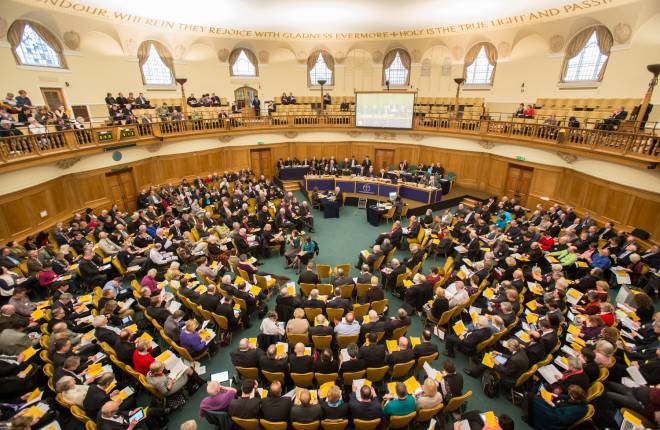
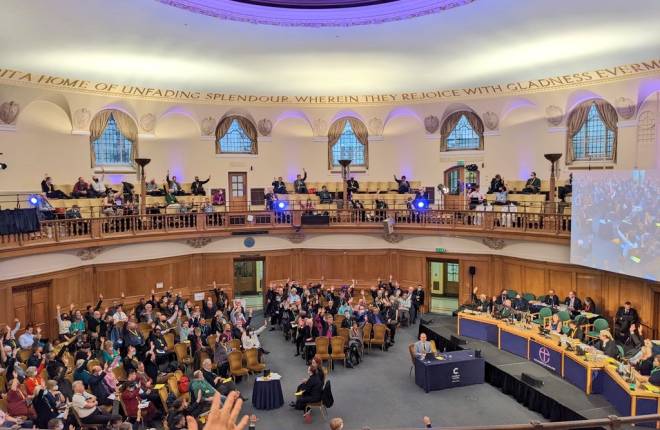
the Church Assembly were transferred to the General Synod (with
Parliament's powers unchanged). Additionally, under the 1969
Measure, the power to legislate by Canon, which had up to that
point been vested in the Convocations of Canterbury and York, was
transferred to the General Synod.
An outline of the legislative process in the General Synod is
provided here. Up to date
details of all Church of England legislation currently being
considered by the Synod or by Parliament are available here.