07 February 2012
How to serve your community's needs without reinventing the
wheel in every parish: that is the challenge posed by a new project
to be launched by the Archbishop of York at this week's General
Synod.
The Most Revd Dr John Sentamu emphasised how the nation is
facing a prolonged economic downturn which will hit many local
communities very hard. Every community will be affected by the
recession and the need to build up our social bonds has rarely been
stronger.
The report from Professor Hilary Russell - and a new
website - respond to Gavin Oldham's Following Motion in the
"Big Society" debate at Synod in November 2010. More than 45
projects and initiatives are covered in detail in the report and
form the core of the website.
The Archbishops' Council and the General Synod (GS1815) have
committed themselves to three goals for the present quinquennium -
one of them is to find new ways to serve the Common Good of
all. The challenge is, "How can the experience developed in
churches be shared throughout the church so that people thinking
how to serve their community's needs do not have to reinvent the
wheel, parish by parish?"
"The Church of England will not forget the hardest pressed
communities," Dr Sentamu said. "We are present everywhere, and we
will remain present. Our calling is to build community and
neighbourliness with the whole people of the nation."
He added: "This is a good example of the Church of England using
its national profile to develop resources for the local church to
use in ways only locally based Christians can define and decide.
Now we must make sure it is known about in the places where it can
really help."
The Church of England has a wealth of experience and skill in
serving local communities, built up over decades of Christian
witness and action for stronger bonds between people and for
supporting the lonely and vulnerable. People can now go into the
website, starting with the question or issue that motivates them,
and find answers, ideas and examples. They can learn from the
mistakes of others and discover what approaches work
best.
Synod Member Gavin Oldham said: "This report and website brings
together current best practice in Christian community action with
the resources and knowledge base needed to multiply those good
works across the country. It is indeed a mine of information to
help local leaders and social entrepreneurs make their initiatives
successful.
"It includes a wide range of support services, access to
funding, and help with organising volunteers and administration:
all based on a thorough investigation by Professor Hilary Russell
over the past year. We hope its publication will lead to increasing
awareness of the Church's efforts to contribute to the common good,
which are based directly on the Christian gospel's core
values."
Notes
In November 2010 the General Synod approved a following motion
to its 'Big Society' debate. It was a call to action, and it has
resulted in a major feasibility study over the past year conducted
by Professor Hilary Russell from Liverpool John Moores University,
with a steering group comprising Malcolm Brown, Director of Mission
and Public Affairs in the Archbishops' Council, Tim Bissett, Chief
Executive of the Church Urban Fund, and Gavin Oldham, who tabled
the following motion in Synod.
The work is now complete and there are two outputs: the report
itself; and a comprehensive website www.how2help.net or www.churchofengland.org/how2help
.
It is not a comprehensive digest of community action within the
Church of England; it is estimated that over 23 million hours of
voluntary work is contributed each month outside normal church
activities, and the report could not hope to cover all that takes
place. However it draws on a total of 46 projects and other
initiatives from 36 out of the 41 mainland dioceses.
Some examples of local action from the report:
(These are three examples drawn from the projects which the report
and website cover in much fuller detail)
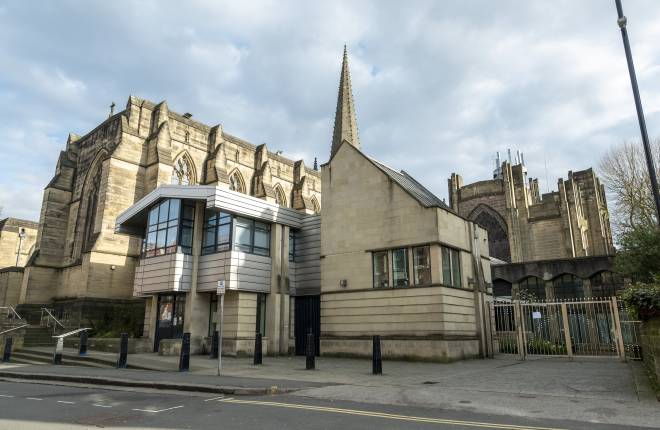
1. St Luke the Physician Church and Neighbourhood
Centre, Longsight, Manchester
Longsight is an area south east of Manchester city centre with high
levels of unemployment and social and economic deprivation. Built
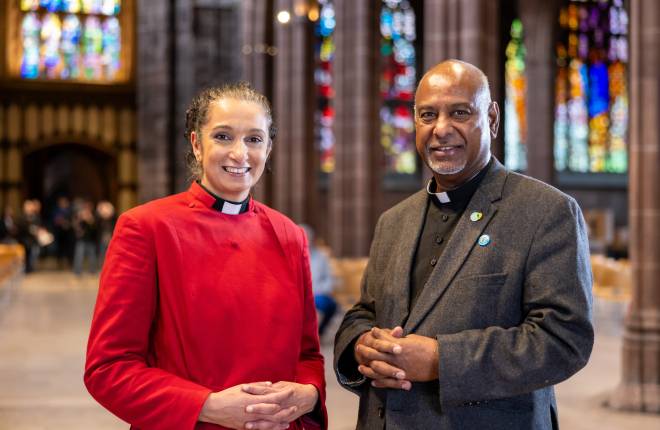
as a combined Church and Neighbourhood Centre, St Luke's has a
multi-ethnic congregation including West Indian and Black African
members. The Centre has provided informal day care for more than
twenty years for people suffering from stress and living with long
term mental health needs.
"St Luke's is such a lovely place, I think because of the
variety of people and the different things going on. And we try, as
much as possible, to be accepting of people as they are. It's not
always easy - we have our moments even between the staff!
Sometimes, if you are tired it can be depressing to see just what
hard lives some people have. But when you see people slowly
emerging from their shell, interacting and gaining confidence, it's
very positive and the hard work seems really worthwhile."
2. The Feast
The Feast in Birmingham aims to help young people of faith overcome
barriers of fear, prejudice and apathy between religions and
cultures, and empower them to be peacemakers and agents of social
change in their communities.
"If the church is going to engage with the world as it is, not
just how we remember it to be, then helping young Christians
befriend Muslims has to be taken seriously by the church. Whenever
we've asked Christian teenagers where they learn about Islam they
always say either school, friends or the media. They never mention
church. Youth Encounter wants to play its part in changing that
answer."
The British Council of Churches set out four principles of
dialogue which many people have used since and which inform the
Feast's Faith and Young People events:
• Dialogue begins when people meet each other
• Dialogue depends on mutual understanding and mutual trust
• Dialogue makes it possible to share in service to the
community
• Dialogue becomes the medium of authentic witness
3. Kairos Partnership, Hereford
The Kairos Partnership is a charity supported by the Diocese of
Hereford but separate from it that works with local faith groups to
start and develop projects to help their communities to reduce
deprivation which may be due to economic factors, lack of transport
or other circumstances.
Kairos works with any faith-based community group (Christian,
Muslim, Jewish or other recognised faith) that needs help to turn
an idea into a workable project, or to grow a small project into a
bigger one. The company will, if necessary, act as an accountable
body for funding and assist in making bids, developing a business
plan etc.