Additional Eucharistic Prayers
Authorization
The Additional Eucharistic Prayers are authorized pursuant to
Canon B 2 of the Canons of the Church of England for use until
further resolution of the General Synod.
Canon B 3 provides that decisions as to which
of the authorized services are to be used (other than occasional
offices) shall be taken jointly by the incumbent and the parochial
church council. In the case of occasional offices (other than
Confirmation and Ordination), the decision is to be made by the
minister conducting the service, subject to the right of any of the
persons concerned to object beforehand to the form of service
proposed.
Introduction
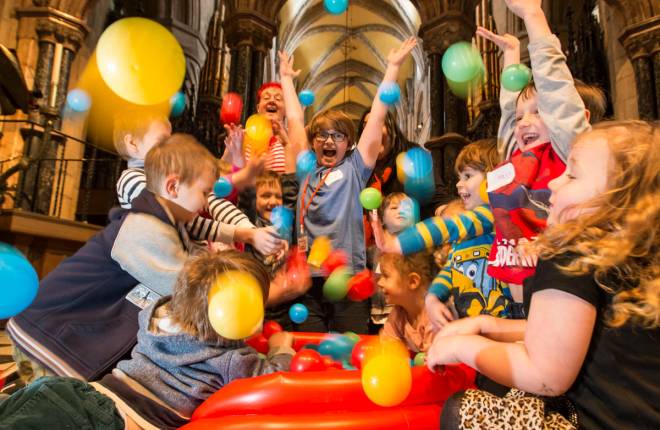
In 2008, the General Synod asked the House of
Bishops to commission Eucharistic Prayers suitable for use on
occasions when a significant number of children are present or when
it is otherwise pastorally appropriate to meet the needs of
children present.The Additional Eucharistic Prayers are the result.
They are intended for occasions such as a school Eucharist, not for
use on a weekly basis at the main celebration of Holy Communion in
the parish church. The Liturgical Commission has also prepared some
guidance on celebrating the Eucharist with children. The Guidance
is printed at the start of the booklet Additional Eucharistic
Prayers: with Guidance on Celebrating the Eucharist with
Children (see Related links), in order to introduce those
planning a Eucharist with children to first principles and to the
development of a model of best practice according to their
particular context. The task of preparing worship is not simply to
facilitate the praying of a liturgical text, but rather to use
imagination and allow space for an entire liturgical experience of
which the text is a part, leaving room for silence and mystery. The
Guidance is intended to help in this task, where a large number of
children are gathered.
There are two Eucharistic Prayers, each of
which has its own distinctive style while conforming to a classical
structure. Both prayers provide for the children to participate.
Prayer One offers optional congregational responses which are
simple enough to be learned quickly and without needing to be read.
Prayer Two uses an optional pattern of asking and answering
questions at three different points. Each question reflects on what
has just been said and the answer calls the congregation's
attention to the next section of the prayer. Prayer Two also
includes specially composed proper prefaces, which relate to a
range of basic themes (light, creation, cities, sorrow, joy) rather
than directly to the seasons of the Christian Year. Local
composition of other suitable proper prefaces is permitted.
Though the prayers are relatively brief,
brevity was not the primary consideration in composing them. A
Eucharistic Prayer is made accessible not only by brevity but
also by using appropriate language and imagery, and by good and
imaginative presidency.
The language is direct, visual and vivid. Some
traditional terms have also been included, in the belief that
children will grow into a deeper understanding of the words as the
prayers are used. Though there is much fresh composition, the
prayers also incorporate core texts which will enter the children's
memories and begin to build a familiar liturgical repertoire as
they mature in age and experience.
Above all, these prayers give expression to the
whole work of the Trinity in creation, redemption and
sanctification. The drama of our salvation, by the incarnation of
Christ and his death on the cross for our redemption, has been
incorporated in each prayer in the form of a story, and in such a
way as to encourage a sense of wonder and gratitude.
Structure of a Celebration of Holy
Communion
Preparation
The people and the priest:
¶ greet each other in the Lord's name
¶ confess their sins and are assured of God's forgiveness*
¶ keep silence and pray a Collect*
The Liturgy of the Word
The people and the priest:
¶ proclaim and respond to the word of God
[a Gospel reading must be included]
[a Creed or authorized Affirmation of Faith must be included on
Sundays or Principal Holy Days]
Prayers
The people and the priest:
¶ pray for the Church and the world
The Liturgy of the Sacrament
The people and the priest:
¶ exchange the Peace
¶ prepare the table
¶ pray the Eucharistic Prayer*
¶ break the bread
¶ receive Holy Communion
The Dismissal
The people and the priest:
¶ depart with God's blessing.
Sections marked with an asterisk* must follow
an authorized text.
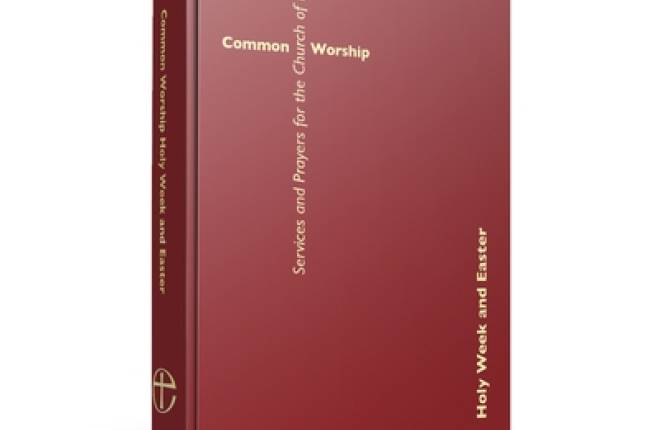
For further details, see Common Worship:
Services and Prayers for the Church of England, pages 21-27,
155-204 and 330-334.
Notes
1 Responses in
Eucharistic Prayer One
Where the optional bracketed responses
[Holy, Holy, Holy] and [Amen,
Amen, Amen] are used, they may be varied in
intonation and volume, repeated several times or set to music,
which is published separately. They may be led by the president
then repeated by a child or by a deacon, and the congregation may
give the final response.
2 Questions in
Eucharistic Prayer Two
The three optional bracketed questions in
Eucharistic Prayer Two may be asked by a single child or by a group
of children. The response may be given by another child or group of
children. The responses should not be made by the president or by
the whole congregation.
3 Prefaces in
Eucharistic Prayer Two
Short proper prefaces are provided for use in
Eucharistic Prayer Two. Prefaces may also be composed for a
particular celebration. The president must be satisfied that any
such preface complies with Canon B 5, paragraph 3.
4 Use of
Eucharistic Prayers One and Two
Eucharistic Prayers One and Two are authorized
for use in the Order for the Celebration of Holy Communion:
Order One and in A Service of the Word with a Celebration
of Holy Communion, on occasions when a significant number of
children are present or when it is otherwise pastorally appropriate
to meet the needs of children present. They are not intended for
use on a weekly basis at the main celebration of Holy Communion in
the parish church.
For notes relating to the Order for the
Celebration of Holy Communion: Order One, see Common Worship:
Services and Prayers for the Church of England, pages 158-159 and
330-334.
Common Worship: Additional Eucharistic
Prayers, material from which is reproduced above, is copyright
© The Archbishop's Council 2012.