

There is no doubt that the choices you make about your wedding day can make a huge impact on the total cost. Part of the cost will be for the legal fees, and everyone pays this. There are also optional extras which you can choose or decline, according to your budget.
Compulsory costs
There is a required legal fee for marrying in a church. In 2023, the legal fee is a maximum of £641* if you choose to marry away from where you live, and a maximum of £539** if you marry in your home parish.
This is set by the Church of England nationally and is the same for every church.
This basic legal fee includes the cost of the vicar, the church, calling your banns, a banns certificate, lighting and all administration. (After your wedding, when it has been registered at the relevant register office, you will also pay the register office for your marriage certificate – the certificate is no longer issued by churches).
This required fee has ancient origins and ensures your church can maintain essential services like weddings, christenings, funerals and all kinds of other ministries for you and your community.
Optional extras
The statutory wedding fee doesn’t include extras you may choose or decline, such as:
- The support of a verger, who ensures the church is warm, clean and tidy for your wedding and can help with handing out Orders of Service and hymn books etc. They can assist with disability access if needed by your guests and guide people to find their seats, toilets or crèche if there is one. They can be indispensable in larger churches, freeing up the vicar to give their full attention to you and the wedding service.
- Additional heating in the church. The vicar will let you know if this applies to your wedding.
- Having an organist, choir or bell-ringers – these extra staff will all need to be booked in advance. Sometimes, the church may ask for a deposit to secure these bookings.
- Bear in mind that if your wedding is filmed, musicians like the organist can request an increase in their fee to take into account professional performing rights (read more). Check with the church what the local arrangements are.
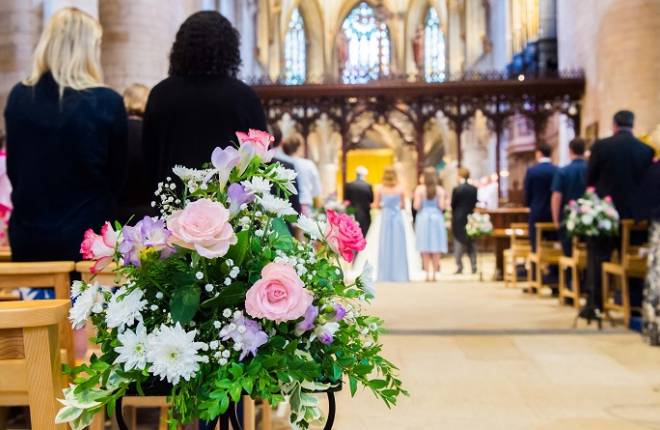
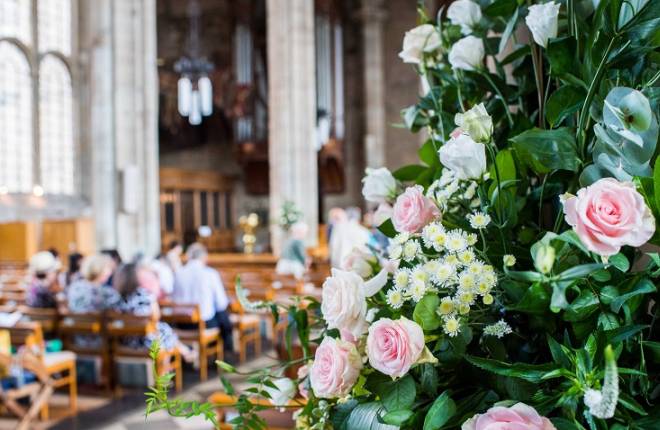
- Church flowers – some churches have a local flower arranger who can help you with the flower displays in church.
You do not have to have any of these extras, but many couples are keen to have at least some. If you choose them, they will cost extra. The costs for each will be at your church’s local rate.
Affording the costs
Talk to your vicar early on about what the total cost of your wedding is likely to be. It is good practice for the church to provide you with an itemised quote before your wedding so that you can see exactly what you will be paying for.
Once the final church bill has been agreed, some couples are still keen to offer a donation to the church. Donations may help to cover things like administration and the upkeep of the building. While these gifts are very kind, you needn’t feel under any obligation.
If you’re struggling to afford your wedding costs, or finding yourself in financial difficulties, it is worth mentioning this to your vicar as they might be able to suggest ways to help. If you need to borrow to pay for your wedding, why not consider using a local credit union? Credit unions offer affordable and responsible credit, and some will even offer special deals on loans for weddings. You can find a credit union near you by following this link.
**The figure for marrying as of March 2023 breaks down as follows if you marry in the parish where you both live (£539):
- Marriage service in church: £505
- Publication of banns of marriage: £34
If one of you lives in another parish (£590):
- Marriage service in church: £505
- Publication of banns of marriage in the church where you are getting married and one of you lives: £34
- Publication of banns of marriage in the church where the other person lives: £34
- Banns certificate from the other parish: £17
If both of you live in different parishes from each other and other than the one you are getting married in (£641):
- Marriage service in church: £505
- Publication of banns of marriage in the church where you are getting married: £34
- Publication of banns of marriage in the different parishes where you live: £34 x 2
- Banns certificates from the two other parishes: £17 x 2